Product design · Case study 01 / 05
NEATLY
Brand identity / Graphic design / Visual communication
A student-focused creative and document services brand providing professional printing, CV design and assignment formatting.
Nineteen supplied NEATLY brand, research and strategy graphics—including a ten-slide strategy presentation—along with a social-media contact sheet, are shown below. Audience and needs claims, competitors, prices and service-flow steps are concepts or unverified; sample CVs and contact details are not Prince’s or confirmed NEATLY data; no completed research or outcomes are claimed.
01 Project introduction
A student-focused creative and document services brand providing professional printing, CV design and assignment formatting.
From supplied brief
02 The context
The supplied NEATLY materials now include a social-media kit and nineteen brand, research and strategy graphics, including a ten-slide brand-strategy presentation. Audience and needs, competitor positioning, sample prices, contact details and service-experience assumptions remain concepts or unverified; each graphic is labelled with its evidence status.
Supplied draft · verification needed

This supplied brief describes NEATLY’s intended purpose, audience, promise, personality and differentiation. The résumé example inside the graphic contains sample name and UK contact details that were not supplied as Prince’s or verified NEATLY information; replace or remove those details before sharing it publicly.

This supplied graphic describes intended services and the promise ‘Neat work. On time.’ The person shown is illustrative, not evidence of a real customer, and the stated promise is not a performance result.

This cover presents a proposed service promise, not a measured result. Its Jordan Taylor résumé and UK-style contact details are sample material, not Prince’s or confirmed NEATLY information; replace or remove them before publication.

Industry, audience, services and ‘Neat work. On time.’ are supplied brand intentions. They are not independent confirmation of current services, customer demand, service delivery or performance.

Purpose, mission, vision and values are proposed aspirations. The graphic does not provide evidence that affordability, reliability, convenience, growth or any customer outcome has been measured or achieved.
03 The problem
Placeholder — add Prince’s supporting project evidence before presenting findings or outcomes.
Placeholder · evidence needed
04 Research & discovery
This section contains owner-supplied working graphics. Drafts, templates, hypotheses and requested verification are noted beside each image; no unreported findings are claimed.
Supplied draft · verification needed

The graphic itself calls business names and sources editable research placeholders and says to verify observed services and prices. Competitor observations, source links and evidence for strengths or weaknesses must be added before this is described as completed or verified research.

The graphic presents Tendai Moyo as a representative persona and explicitly says its persona statement is hypothetical, not a real interview quote. It is shown as a draft, not as validated user research or a confirmed interview participant.

The student and job-seeker segments, their needs and their stated values are presented as audience hypotheses. The supplied slide contains no research sample, interview evidence or validation results.
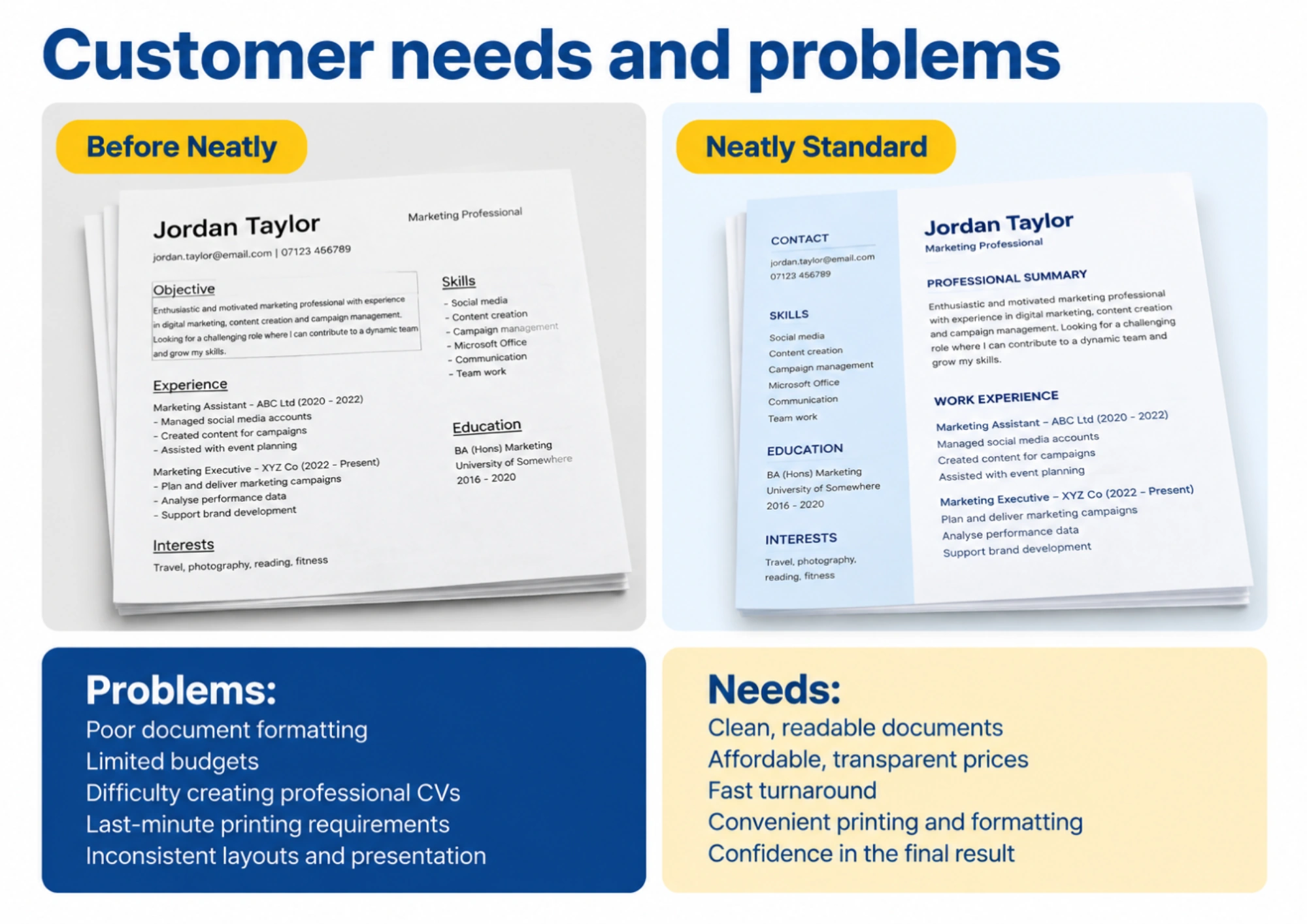
The problems and proposed needs are hypotheses; this slide does not include confirmed customer findings. Its illustrative Jordan Taylor résumé and UK-style email/phone details are not Prince’s or verified NEATLY contact data and must be replaced or removed before publication.
05 The opportunity
This section contains owner-supplied working graphics. Drafts, templates, hypotheses and requested verification are noted beside each image; no unreported findings are claimed.
Supplied draft · verification needed

The ‘research finding’ field says to insert a verified finding and source or observation. The graphic labels its opportunity as a strategic hypothesis pending competitor research and customer feedback; it is not a validated customer finding.
06 Design strategy
This section contains owner-supplied working graphics. Drafts, templates, hypotheses and requested verification are noted beside each image; no unreported findings are claimed.
Supplied draft · verification needed
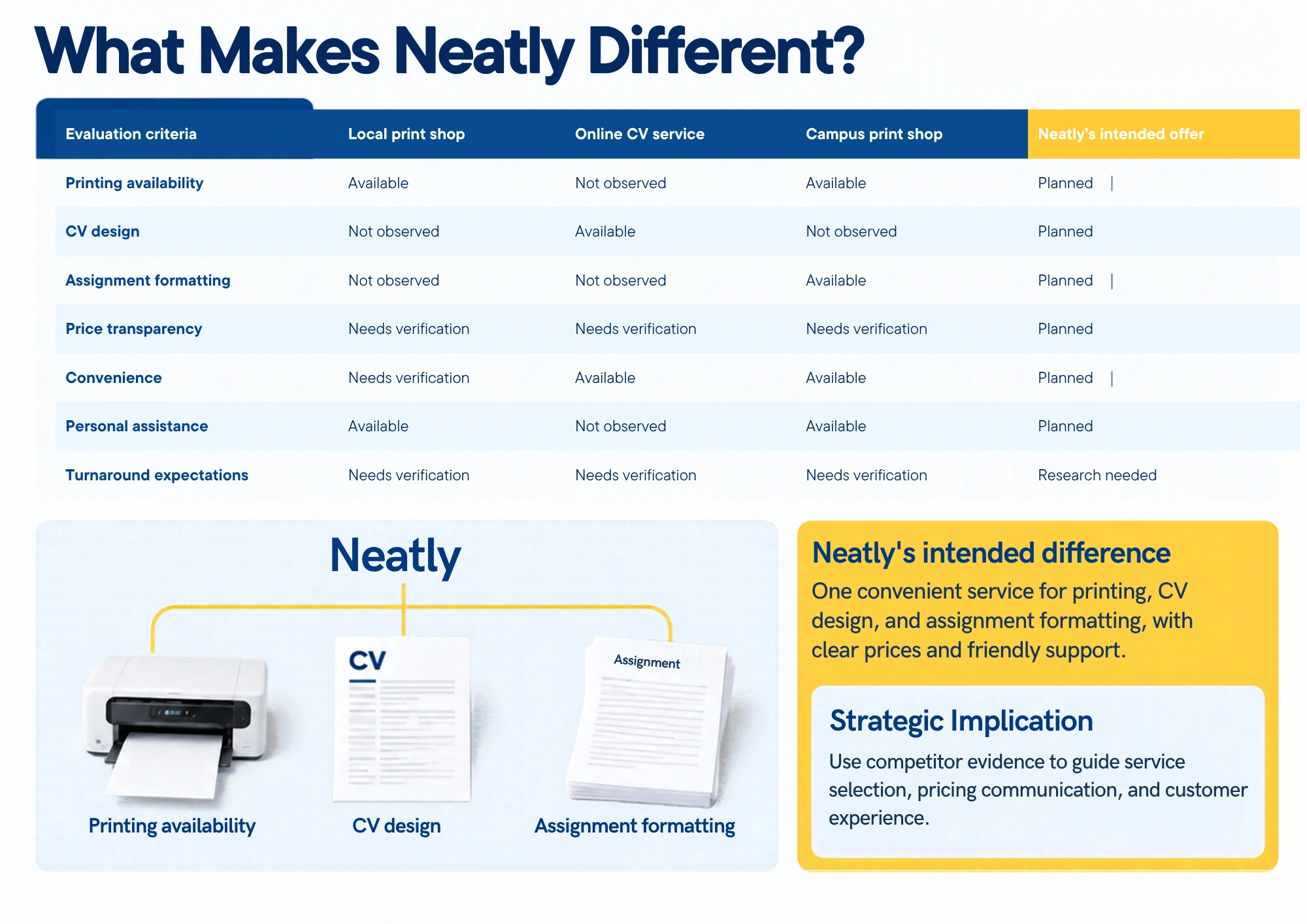
The comparison includes entries marked ‘not observed’, ‘needs verification’, ‘planned’ and ‘research needed’. Treat it as a provisional working comparison, not as verified competitor results or confirmed service availability.

This graphic lists proposed next steps—source-backed competitor research, service and price verification, customer interviews, concept testing, example templates and positioning refinement. It is a plan for future validation, not evidence those activities have already happened.

The purpose, audience, need, promise, differentiation and personality are proposed brand strategy. They are not validated customer findings or verified service and market evidence.
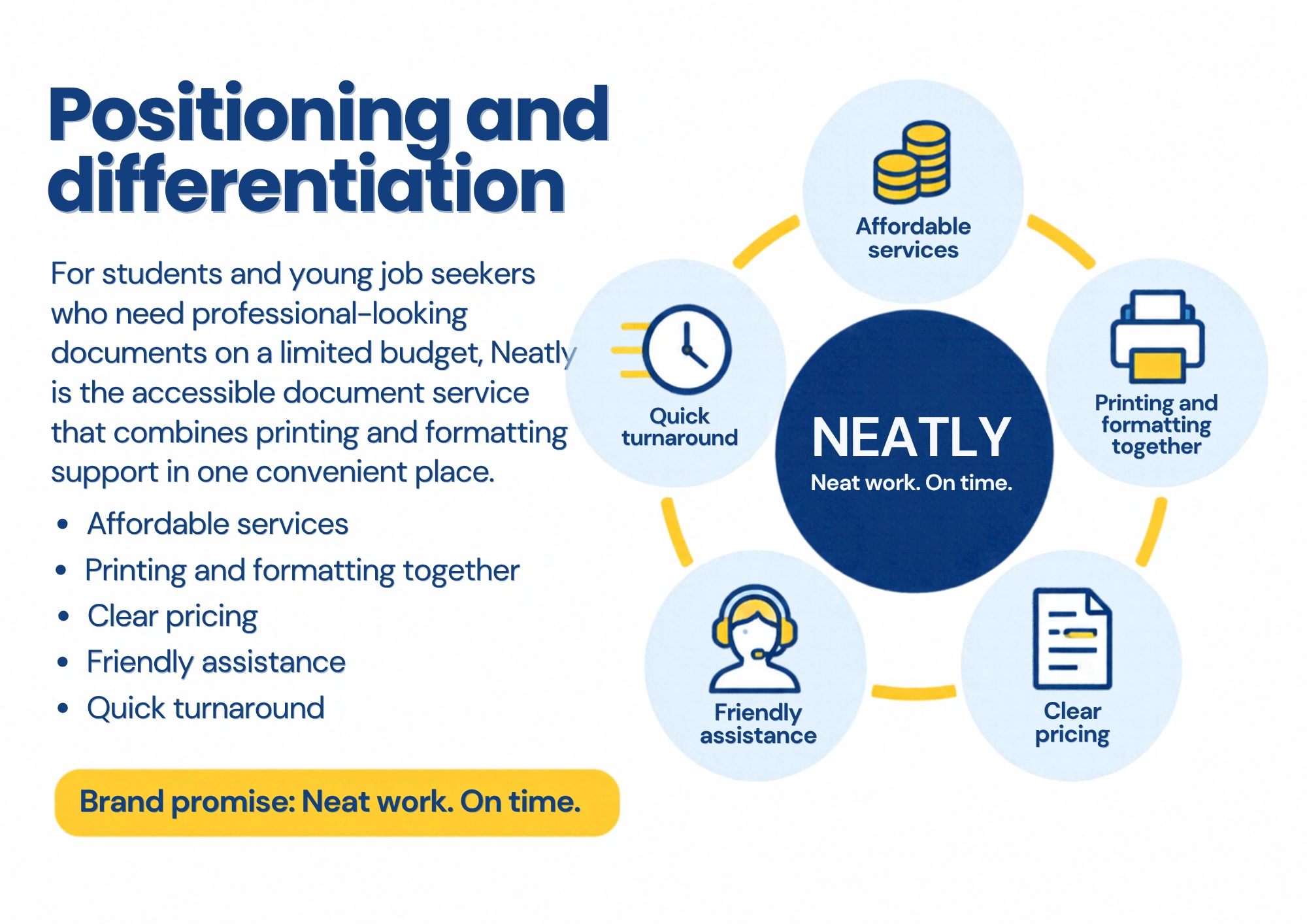
The claimed market difference requires source-backed competitor research. Affordability, pricing, assistance and quick-turnaround statements are proposed positioning—not verified competitor comparisons, confirmed prices or service guarantees.

The personality, tone and example taglines are draft brand direction. The graphic does not indicate that this copy has been tested with users or approved as final.

The stated audience, promise and personality are proposed positioning. ‘Competitor 1/2/3’ are placeholders explicitly marked for research and verification. The Tendai persona is not evidence of validated customer research; the strategy and visual direction are not presented as approved final branding.
07 Design exploration
This section contains owner-supplied working graphics. Drafts, templates, hypotheses and requested verification are noted beside each image; no unreported findings are claimed.
Supplied draft · verification needed

The wordmark, colors, typography, icon style and application mockups are concept work, not an approved final identity. The supplied archive contains flattened slides, not editable source files; its price-list and CV mockups do not establish verified prices or real contact details.

This is visual inspiration, not an approved final identity. The price-list entries visibly show ‘[Add price]’ placeholders; the embedded Alex Taylor CV and London/UK contact details are sample content, not Prince’s details or verified NEATLY prices. The pictured students and the claim that real students find the service relatable are not evidence of customer interviews or validation.
08 The solution
This section contains owner-supplied working graphics. Drafts, templates, hypotheses and requested verification are noted beside each image; no unreported findings are claimed.
Supplied draft · verification needed

The five steps and desired service principles are a proposed customer journey, not evidence of an implemented or tested operation. Price, turnaround and service expectations remain unverified. The collage includes an illustrative Jordan Taylor résumé with UK-style contact details, not Prince’s or confirmed NEATLY information.
09 Final visual outcomes
A supplied NEATLY social-media contact sheet shows nine square post-template designs. Its copy and contact details are still placeholders; no results or editable source files are inferred.
Supplied visual · copy/contact update needed

The supplied sheet describes editable 1080 × 1080 templates and instructs the user to replace copy and contact details before publishing. Its visible @yourhandle and generic contact-detail fields are still placeholders and need approved NEATLY details. The supplied file is a flattened contact sheet; individual editable source files were not included.
10 Lessons & reflections
Placeholder — add Prince’s supporting project evidence before presenting findings or outcomes.
Placeholder · evidence needed